Archive for category History in our surroundings
The Lying Decade
Posted by John Dickson in History in our surroundings, Public Affairs on May 26, 2011
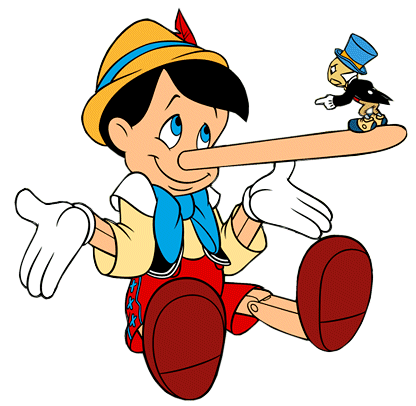
Our favorite liar
I want to go on record as being the first person to name the first decade of this century, this millennium even. The Lying 2000s.
Hopefully we won’t be lying for the entire millennium, but, unlike the 1920s or the 1960s, there’s no easy way to label those ten years where we ended up calling each year two thousand one, or two thousand eight.
We have other terms which have stuck for labeling decades, like “The Roaring 20s” or “The Me Decade.” We don’t even give a name to the 1960s other than “The 60s” because we all know all the connotations and references which the mere number elicits.
Historians will say it takes some time to label a decade. However, the “Me Decade” for the 1970s caught on after a Tom Wolfe article in 1976, well before the ten years were actually up.
What’s not hard though is to admit that it was a decade of lying. Lance Armstrong is the latest as new revelations have come out about his alleged use of performance enhancing drugs. Add his name to the list of Barry Bonds, Martha Stewart, Bernie Madoff, John Edwards, and so on. It’s not just Bonds and Armstrong in sports, but the list is long. Nor is it just John Edwards in politics, but how about John Ensign or Rod Blagoyovich or that deliciously wonderful Governor Sanford from South Carolina who went hiking on the Appalachian Trail….in Argentina? Or the Pat Tillman and Jessica Lynch stories out of our interventions in Afghanistan and Pakistan. Or how about weapons of mass destruction in Iraq?
There’s a new book out by James Stewart called Tangled Webs, where he reports in depth on four of the most famous liars. But to my knowledge, he doesn’t make the case that the decade be given this name. And, he only concentrates on these four cases.
Truth is (pun intended,) the lying epidemic does go back a ways. Watergate, Monica Lewinsky and even the steroids era started well before this decade. And the lying is not confined to this country, as we are now seeing with autocrats in the Middle East, like Ghaddafi, claiming that all is well in his country. The Soviets were masters of lying, about their economy, about the joys of their system, about their lack of knowledge of the huge Gulag system of prisons.
I was a naïve diplomat when I told an audience in Mexico that there was no reason not to believe Secretary of State Colin Powell as he made his case to the UN about weapons of mass destruction in Iraq. “We went through our period of lies in the 1970s,” I said. “We learned that lies will eventually be found out.”
I was right about one thing. The lies were found out.
In any case, let’s start a movement for calling the last decade the Lying 2000s. Maybe it will help shake us of that habit, so we could call the next decade something more inspiring. But that’s probably naïve.
Are we still fighting the Civil War?
Posted by John Dickson in Civil War, History in our surroundings on April 21, 2011

From The Last Full Measure: Civil War Photographs from the Liljenquist Family Collection
Probably not, if the fighting is “kinetic” to use a current Defense Department term. And yet, few will deny that the tensions which gave rise to the fighting 150 years ago are still present in contemporary America. Whether it is the sparks over the confederate flag, or statues on university campuses and town squares; the omission of references to slavery by a current Governor in remarks about the Civil War or proposals to repeal the 14th Amendment which made citizens of “all persons born in the United States,” those tensions still linger close to the surface.
Last week, in the commemorations marking the 150th anniversary of the firing on Ft Sumter, we faced those tensions again.
A few random questions on the war from 150 years later.
— What is its name? We can’t even agree on the name of the war. Southerners may call this the War between the States or the War of Secession, but I’ve never heard anyone from the North call it anything but the Civil War. And come to think of it, there’s nothing civil about this war at all.
— When did the war begin? We may actually have been marking the wrong date as the beginning of the war. Almost lost have been the first shots which took place, also at Ft. Sumter, but on January 9, 1861 when a northern resupply ship called “The Star of the North” was fired on by cadets at the Citadel, sending the ship back to New York.
— Was the war fought in black and white? Since I am old enough to remember the centennial, my first memories are from the photographs, of Lincoln, his Cabinet and his generals, of the dead on the battlefields, of John Wilkes Booth and John Brown. With these black and white ambrotypes and tintypes etched in my mind from a young age, it’s hard to imagine the war fought in living color, or even three dimensions. The beautiful, pastoral color scenes in Ken Burns PBS series on the Civil War stand in stark contrast to the harsh black and white photos from that war. The current exhibit of soldiers’ photographs at the Library of Congress (The Last Full Measure) show stiff, slender and sometimes frail posed soldiers in coarse clothing and uniforms.
— Does the Civil War sell well? You bet it does. On April 12, The Washington Post had a full section devoted to the start of the war, for which they had no trouble getting advertising. PBS re-ran the Ken Burns special on the Civil War; a stop at a Virginia tourism center has a whole section dedicated to visits to battlefield sites (“over 60% of the battles were fought in Virginia,” we were told); the Civil War section at any bookstore or library is larger than any other US History; Robert Redford’s movie The Conspirator on Mary Surrat drew large crowds in its first weekend .
Recommended reading: Confederates in the Attic, a slightly humorous look at the “unfinished war” by Tony Horowitz. Two thoughts from the book: one in four Southerners are direct descendents from people who fought in the war, while the figure is closer to one in ten in the North; and a quote from a park ranger at one of the battlefield parks: “One guy even asked me why so many Civil War battles were fought on national parks.”
A Third of Your Lifetime
Posted by John Dickson in Colonial, History in our surroundings on April 10, 2011
So, you think you wanna go back in time for just a short while? Better hope that it’s just not an overnight! Not unless you don’t care about comfort. Or sleep free from worrying about what critters might be crawling around in the mattresses.
I found out more than I cared to know of from a current read of another of those books in the Founding Father genre, but this one with a twist: a Founding Mother. It’s Betsy Ross, and the Making of America, by Marla Miller. Unlike the other Founding Father books, Miller doesn’t have a lot of newspaper, broadside or even correspondence and memoir of the actual person, but she does sew together a story of period, including the crafts and trade world Betsy Ross inhabited.
Betsy landed her first job when, in her teens, she visited her sister in an upholstery shop and ended up finding herself employed as well. Miller describes the stuffing and stitching of mattresses, with feathers (okay), wool (not so bad either) and hair (hmm, take a pass). It’s the last option which seems to have been, while not preferred, maybe more accessible, with use of horse, cattle and dog hair curled and stuffed into the fabric which upholsterers like Betsy then stitched together.
Oh, did I mention sterilizing the hair, because of the possibility of bugs? Sure enough, but did it last? Miller unearthed some advertisements for various remedies to rid your bed of the bugs: “Even if your pests ‘swarm ever so much,’ a thorough dousing of the bed and bedding ‘will infallib’y kill and destroy both them and their Nitts.” Better go out right now and get some of that potion. Unless you want to take your mattress back to Betsy at the upholsterer’s and get it “refreshed.”
All this assumed you even owned a bed, whose cost may have put it out of reach for those without means. Miller costed out a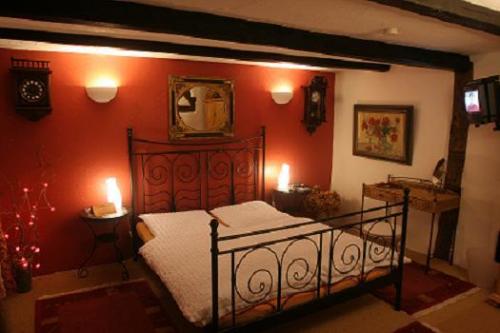 complete bed, furniture and mattress, pillows and curtains at £23, compared with a sixteen-acre lot of land at £10. In today’s prices of about $5000 an acre, that would make my bed worth more than $160,000 dollars. Might be time to get an e-Bay account and sell my bed!
It reminds me of the time when we bought our first new mattress. The salesman’s pitch was to make the investment on where you spend a third of your lifetime.
How Small We Are
Posted by John Dickson in History in our surroundings on March 31, 2011
This past weekend, I drove down to Washington DC from western Massachusetts, a route I probably have driven at least a dozen times in the past few months. It’s a route which crosses three major rivers – the Hudson, the Delaware and the Susquehanna. Each one of these may have taken just a few minutes to cross over, and if it weren’t for EZ Pass, I would have been held up by the tolls much longer than by the crossing of the river.
So, here’s the deal, the historic deal. Two hundred years ago, these rivers would have loomed much larger in our lives than they do now. First of all, people didn’t make that kind of trip, sometimes never in their lifetime leaving a small radius around their homes. Despite our national self-image, it was only a small fraction of people who ventured further westward, to push back the frontiers. For those who did have to venture out (and it was a “have to” because nobody traveled such a distance just to go skiing), rivers figured as either the obstacle and delay, or as the quickest means of transport.
Photo by Adam Elmquist, Google Earth
Whenever I see the Delaware Memorial River Bridge, I think back to the first time I paid any attention to it. I turned the corner off the NJ Turnpike and came upon this towering steel monument, an awe-inspiring engineering feat unimaginable in Gabon, where I had just returned from spending three years in the Peace Corps. That sight was as much a culture shock as anything I encountered upon my return. Travel overland in Gabon was constantly interrupted by having to wait for ferries to cross even small rivers; most bridges in the interior were precarious wood structures, sometimes nothing more than logs laid across even a small ditch. Coming to a river meant a delay, to wait for the ferry to return or to get out of the car and help the driver steer his tires across the slippery logs.
The Millard Tydings Bridge over the Susquehanna is not as inspiring as its sister structure over the Delaware, except that its drive surface may be even higher over the water, since it connects cliffs on either side. In addition, the crossing is so seamless most of us never pause to think of the name of the bridge we just crossed, let alone the Maryland governor it was named for. Without the towers and cables, drivers space out (except on windy days) listening to their audio books or music and never even realize what a magnificent feat of historic progress they just experienced.
In 2014, a bicentennial will be celebrated (I hope) in Columbia, Pennsylvania, marking the construction of the first bridge over the Susquehanna. Who has heard of Columbia, a small and mostly forgotten town now, but the site of a ferry crossing prior to 1814, and then the bridge? Its ferry crossing meant that with just a few votes more, it could have been the capital of the U.S., or years later of Pennsylvania.
The diminishing influence of rivers in our national psyche was also driven home this past summer, as my family re-traced (in the comfort of our air-conditioned, hybrid SUV) the Lewis and Clark expedition. One of the more striking aspects of the whole trip was how hard it was to even see the Missouri River. Hardly ever did the road follow the river, causing us to drive endless triangular movements due north and then due west just to catch a site of its massive, snaking body. For Lewis and Clark, with whom we were on a first name basis by the end of the trip, the river was everything – their means of travel, their daily adventure, their obstacle to be surmounted.
Now, rivers are an afterthought. But look at the picture at the top of the page of the Susquehanna, and you can’t help but be struck immediately how small we are crossing the Millard Tydings Bridge.
All aboard
Posted by John Dickson in History in our surroundings, Personal memory on March 20, 2011
Have you ever said “Wouldn’t it be fascinating to go back and see how people lived 100 years ago? 1000 years ago?”
Which era would you want to visit? For how long?
It is hard for me to imagine wanting to live at any other time than NOW. It doesn’t take too many history books to appreciate how cozy and luxurious we have it, especially those of us living in the United States. For example, my current reading, Mayflower by Nathaniel Philbrick, highlights the starvation, disease and warfare with Native Americans which the earliest settlers to this country faced for decades. In the first six months following their landing, 52 of the original 102 Pilgrims who landed had died.
Or, this past summer, it took me six weeks to drive along and re-trace the Lewis and Clark expedition, by car, by foot and on bicycle, in comparison with the almost two years it took for them. While we did experience incredible summer storms which wrecked our tent, we could still retreat to the safety of our car to wait out the storm. Our making it back to Chicago in time for the afternoon game at Wrigley Field certainly pales in comparison with the arrival back in St. Louis by all but one of the original expeditionary group accompanying Lewis and Clark.
So, it would be nice to visit, for an afternoon, maybe even an overnight, but I’d want to get back here pretty fast.
What was so amazing during that summer trip across the West was how much of the country along the Missouri River looked as Lewis and Clark would have seen it. Sure, the human impact has changed the settlements magnificently, but theirs was a trip about geography and documenting the habitat. We did not see the numbers of buffalo they ran into, but we certainly saw the force of the river and its overflowing banks through the level plains to appreciate first how easily it is to see that the river can change course, but also how hard the expedition must have had it to go upstream, with mud and swamps on either side of the river. It sure made me realize how I was never cut out to do the work that either Lewis or Clark, or any of the men accompanying them had to do make it across country.
What was fun, though, was transporting myself back to that time, for an extended period, trying to imagine seeing the landscape as they would have seen it.
The more I thought about that, the more I became involved in various projects and trips did I begin to sense the history all around us. Thus was born this blog. This time capsule only goes in reverse, not forward. It is a random walk backwards, to see our surroundings and current events, in the light of their history.
Welcome and all aboard.
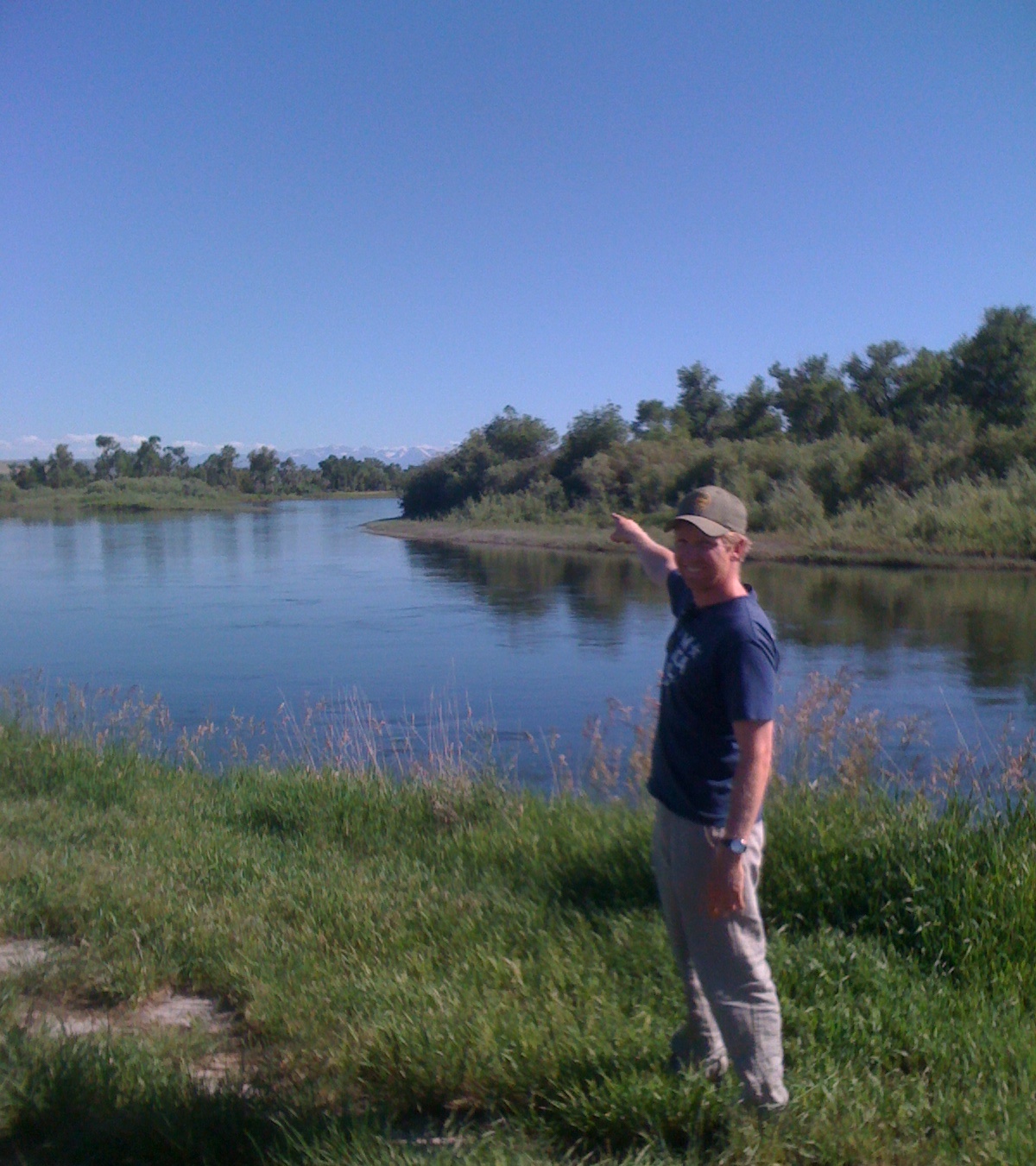
Headwaters of the Missouri
-
You are currently browsing the archives for the History in our surroundings category.

A memoir in letters. Excerpts from letters that a father wrote his children each week for almost 30 years, full of the mundane and poignant, the witty and wise. Stories from a different time, from a small town in Connecticut.
History Shock
 Pleased to announce the publication of my book in May 2021 by the University Press of Kansas. This collection of “stories with a history” narrates incidents over the course of my career in the Foreign Service when historical understanding – or lack of it – got in the way in the conduct of day-to-day diplomacy.
Berkshire County’s Industrial Heritage

Check out this book on the nineteenth century mills and those who owned and worked in them. Available through Arcadia Press or Amazon.
Slide Show – Getting to Yes, Woman Suffrage in the Berkshires and Beyond
-
Slide Show – Intersections, Pittsfield’s Neighborhoods
-
Slide Show – Turning Points


Slide Show – Preserving the old Berkshire Athenaeum
 Thomas Allen donated $50,000 to build the Athenaeum in 1876.
 A yong architect from New York, William Appleton Potter, had his design selected for the new Athenaeum.
 The original architectural drawing of the front elevation of the Athenaeum
 An early photo of the High Victorian Gothic building, pointed arches, twin gables, multi-color stone patterns,skylight, stained glass windows
 Majestic, quartered oak tresses in the addition built in 1896
 Proposed new library design, in 1944
 Bulging of stonework on from of building required drastic measures to shore up front, in 1979
 A restored skylight is returned to the roof in repairs undertaken in 2001
 Stained glass window on west gable, showing steel tie placed in 1979 stabilization repairs
 Masonry work begins on the Athenaeum in the deep of winter
 Removing the stained glass panels for repair
 Cracks in the masonry
 More cracks in the masonry
 Lifting the capstone off the east gable, the first stone removedd








 History All Around