John Dickson

This user hasn't shared any biographical information
Homepage: https://timecapsulepilot.wordpress.com
Behind the Green Curtain
Posted in Berkshires, History in our surroundings, Preservation, Public History on April 17, 2014
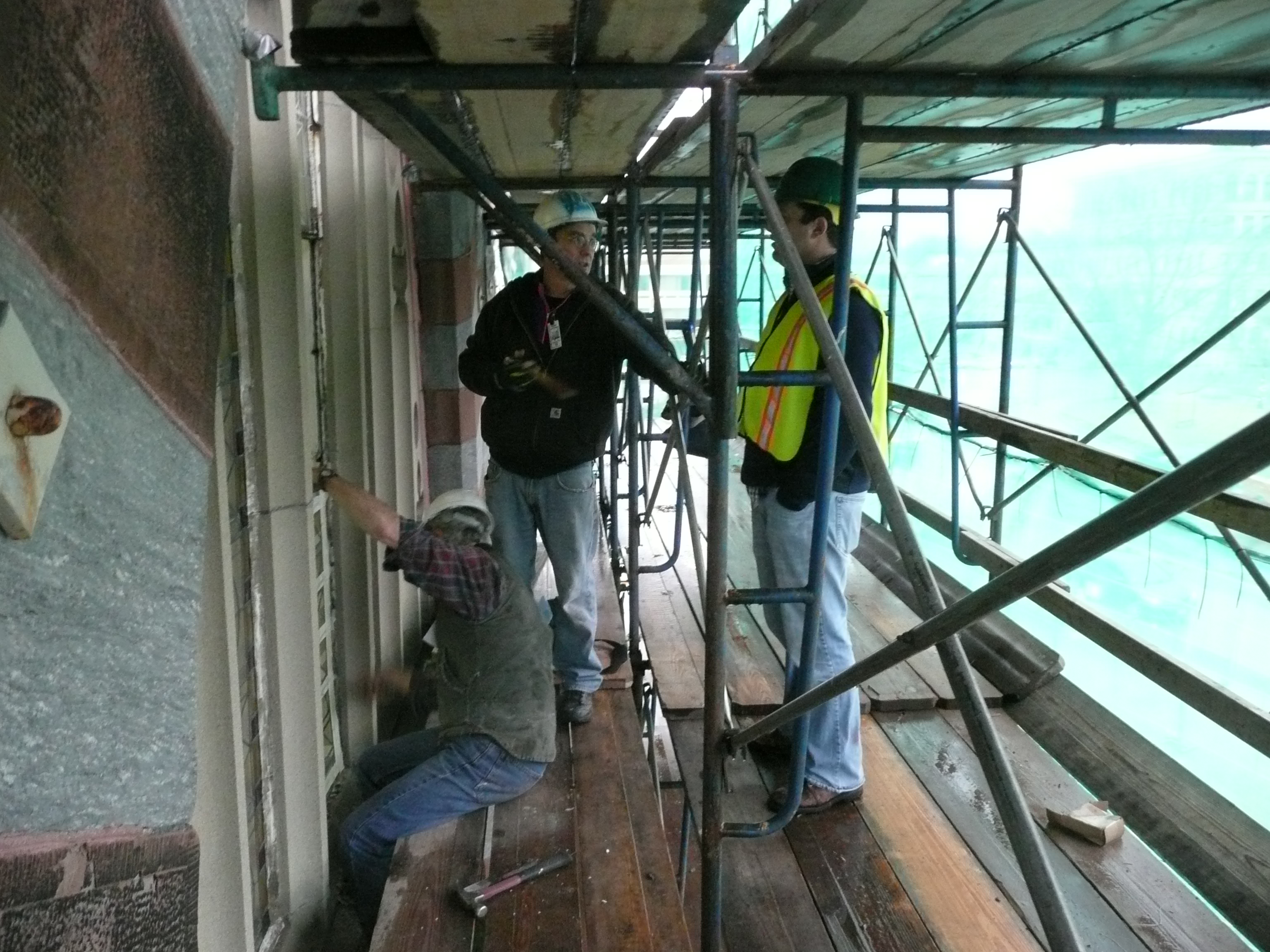
On the scaffold, behind the curtain, preparing to remove the stained glass panels. Photo, the author.
There are stories behind the green curtain that people walk and drive by each day. It’s not just the five stories of scaffolding that the curtain shields for the ongoing preservation work of the old Berkshire Athenaeum on Park Square in Pittsfield, Massachusetts. It also shields stories related to the complexity of preserving this building, stories about its benefactor and architect, and stories narrating the evolution of the city.
Above the front entrance to this Victorian Gothic monument is an inscription that reads “This tribute to science, art and literature is the gift of Thomas Allen to his native town.” Thomas Allen, a railway baron before there were such men, moved out of Pittsfield and did go west, to Missouri, where he set himself up in the railroad business, and then ran for state office to help get the legislation needed for land acquisitions. He predated Andrew Carnegie by decades in donating the money for a new library for the town in 1874.
Allen selected the design of William Appleton Potter, a young architect from New York who specialized in Victorian Gothic buildings: grand, ornamental Gilded Age structures, permanent grey and brown stone monuments, with pointed arches, skylights, gables and stained glass windows. Potter had designed the library at Princeton University, and the two men shared a Union College connection. Perhaps, though, it was through Potter’s brother-in-law who was the sculptor of the Civil War soldiers’ memorial on Park Square that Thomas Allen became acquainted with Potter’s work. Allen had been a donor for that statue as well.
At the dedication to the library, Thomas Allen revealed his hopes for the new building: help save the nation. He could have been thinking of the Civil War, as the soldiers’ memorial erected just a few years earlier was in plain sight across the park. He also had in mind the new immigrants in the town’s mills and factories and their children who would learn the ways of their adopted homeland through the library. As impressive and unique as it was, the building suffered from both structural and space inadequacies almost from its beginnings. Twenty years after its opening, the library’s leaders were complaining about water leaking and insufficient space for books. A new addition and a new museum left more room for books, but many in the library and the city spent the next half century clamoring for a new library.
The building survived, serving a population growing with the success of its chief employer, General Electric, and outlasting calls for its demolition. With urban renewal of the 1960s claiming whole blocks of buildings just one block away, the Athenaeum escaped unscathed. By the time the funding became available for a new library, the country and the town had turned the corner in its appreciation for historic buildings. A new library was built a block away, but this building was re-adapted for a courthouse and registry of deeds.
As one of 8 historic structures, the Park Square historic district received approval for placement on the National Registry of Historic Places in 1975. As such, it has helped sustain a downtown that has suffered loss of business and consumers since then. Pittsfield’s efforts to revitalize its downtown over the last two decades have relied on the presence of its historic buildings that offer an attractive and authentic vitality to the city.
Its structural problems remain, however. One engineer assessed the situation in the 1970s simply: William Potter was trying to do too much, too many roofs, too many places for water to seep behind the stones and through the skylight. As the water would freeze and thaw, it would open up more space for water to seep, increasing the bulging. Major structural repairs, including steel ties across the front and side elevations, were required for its stabilization in the 1970s. Again in 2001, the rotting skylight was restored, the roof was replaced and new internal drains on the roofs were installed.
Still, by 2011, the bulging on the front had increased dramatically, as much as five to six inches in places. In September 2013, the state embarked on a major stabilization effort, with plans to remove most of the masonry and stained glass on the front façade. A complicated system of anchors will hold the re-laid stones in place to a reinforced back-up wall. A simple enough sentence, but documenting and removing each stone, storing them off-site, installing new steel supports, repairing the brick back-up wall, re-laying the stones and inserting anchors and grout to hold them in place, is anything but simple. The movement in the wall took its toll on the stain-glass windows, so a similar process of documentation, removals and repairs is underway as well. All work is specialized to ensure the historical integrity of the building, matching colors and textures as closely as possible to the original design.
This effort will save the stories of the old Athenaeum for future generations, so they will be see in the building, stories of their immigrant, working class ancestors who made this one of the busiest libraries in the state, stories of a golden age of prosperity when wealthy elites felt a civic debt to their communities and stories of a misguided urban renewal scheme that demolished entire blocks of the city, but somehow managed to overlook this building, with the help of another generation of civic-minded individuals.
All that behind this green curtain.
After Sonos, what’s next?
Posted in History in our surroundings, Personal memory on March 8, 2014
One of the running conversation games played in my house goes like this: which generation has seen the most amount of change in its lifetime? The discussion usually happens after watching some old episode of Seinfeld where Jerry’s doing body building by lifting his cell phone, or some photograph of a professional football player from the 1950s whose physique makes him look like a chess player, rather than a linebacker.
This time, though, it occurred when we bought the latest music delivery system, a Sonos system about the size of a shoebox with a speaker and no other components. No wires, no amp, no discs or tapes or records.
My own history with recorded and broadcast music starts with the small AM transistor radio and graduates to the Hi-Fi record player capable of playing both 33 rpm albums and 45 rpm singles. My grandfather had a contraption that could record voices on a disc, and he seemed to favor 78 rpm discs. There were several drawbacks to these, most notably that you had to stand up and walk over to the record player to turn the record over or to skip a song that you didn’t like.
That you had to listen to all the songs on a record or actually move to skip the one you hated helped sell me on my first tape recorder. It was a small reel-to-reel machine that could handle tapes of roughly 15 minutes. These I used and re-used for my own personal playlists. The low-tech way of recording was to stick the little mic up to the speaker of the record player, but that changed when we were able to master the wire audio in and out connections. But, I get ahead of myself as I haven’t even touched on cassette tapes or even everyone’s favorite anachronism, the 8-track cartridges.
One advantage of record playing albums still survives to this day. We pretty much learned how to read by poring over the album liner notes, that were actually written in a type size you didn’t need a magnifying glass for. You didn’t have to go to a screen to find information about the artist, and you could easily follow along with the lyrics that were often printed on the album cover or sleeve.
The transfer to stereo music — bigger and bigger speakers, with components for an amplifier and a tuner for radio — was about the last music technology that I actually cared to try to keep up with and understand. Hauling one of these to college or to yet another apartment required a small U-Haul. I can actually remember where I was when I heard my first compact disc, as if it was equivalent to remembering where I was when Kennedy was shot or when Neil Armstrong walked on the moon. The quality of sound, with no scratches or distortions, and the lack of a needle or tape head picking up the sound made this a true wonder.
To lose the needle was hard enough to fathom; to lose the actual physical thing the music was stored on came next as recorded music leapt from CD to IPOD and phone and file sharing. Hello Napster and ITunes, goodbye Tower Records.
It’s good business for the industry as people end up scrapping all the components and all the records and tapes they own every 5-6 years. Then as hip-hop music picks up on record scratching for its edgy, urban sound, we end up looking for the old records and players we used to own, and then going out to buy those again if we no longer have them buried away in our attic or storage units.
All this makes for pretty dramatic change in the course of one life. Still, my wife is not convinced that this is evidence of more change in our lifetime than in our great grandparents’ who witnessed the arrival of recorded music with the invention of the gramophone in the 1870s. This shift took a medium that could only be enjoyed live into one that allowed for repeat performances on demand. What my generation experienced was not so fundamental, since it just changed the nature of recorded music, its delivery system.
So, to ponder this more fully, I’ll go to my phone, find the Sonos App and decide whether to tap into my hundreds of purchased songs on my computer, my account with Pandora for their thousands of songs, or any of thousands of radio stations around the world.
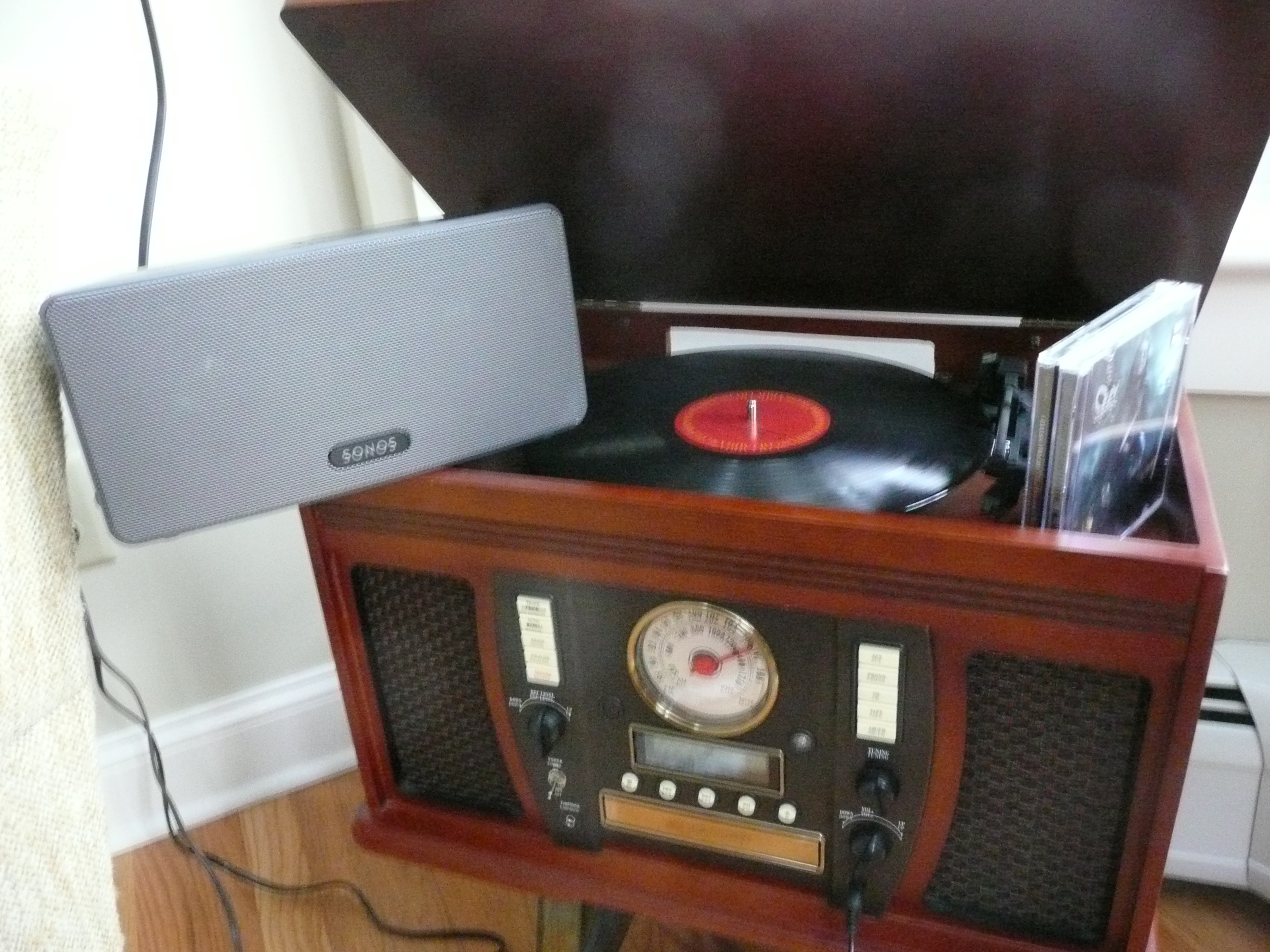
Several generations of music delivery; photo the author.
It’s a far cry from listening to Cousin Brucie on WABC-radio.
Turn, Turn Turn
Posted in Personal memory, Public Affairs, Public History on January 30, 2014
I feel like I’ve known Pete Seeger since I was 18, even though I never met him. So, when the news came that he passed away this week, memories of his music and social causes that inspired many returned easily.
A little about my connection with someone who was my idol. It was his integrity that drew so many to him, even though it’s the same integrity that would likely make him wince at the word “idol”
When I graduated from high school, I received a guitar as a graduation present from my parents. Odd, since I had shown no interest in playing the instrument. A few months later at Christmas, my brother gave me “The Incompleat Folksinger,” a book doubling as a songbook and autobiography. In it, Pete laid out his views on social and economic justice, his flirtation with popular music as a member of the Weavers in the early 1950s, and then his targeting as a Communist in the 1950s. All that, he interspersed with lyrics and tablature of many songs. His story, from his work with labor unions during the Depression through the McCarthy era and into the anti-war and civil rights movements of the 1960s, became the subject of a history thesis my senior year of college.
My thesis argued that the political left showed continuity, from its heyday of support for the working class in the 1920s and 30s, moving through the anti-Nazi era, then weathering the lean, red-baiting 1950s, only to emerge in the 1960s with new issues of peace abroad and racial justice at home. Through it all was music, the folk music of Pete Seeger and others that helped frame the issues, spread the word and unite the activists and supporters. Pete played with Woody Guthrie whose ballads touched a nerve for the mass of unemployed during the Depression; he played with Bob Dylan and Joan Baez, whose folk music in the 1960s addressed the Vietnam War and the Civil Rights movement.
Moving into the 1970s and 1980s (and beyond my graduation and focus of thesis,) the fervor of those movements was passing, even though goals connected to those movements had not been attained. Pete Seeger remained, while many in my generation moved on, to work and family, leaving behind those ideals for which we had once so passionately believed in. Pete (as if he were my best friend) stayed true, true to his music and to his ideals, finding the right balance to match his humble lifestyle. He was the thread to the next progressive movement, using his name and his music to advance environmental issues, specifically the cleaning up of the Hudson River.
I was not surprised to see Pete Seeger performing at President Obama’s inaugural in 2009. He was on the stage set up in front of the Lincoln Memorial, along with Bruce Springsteen. Springsteen had put out an album a few years earlier entitled The Seeger Sessions, where he adapted Seeger’s Americana songbook to his own band and style. Seeger again became the continuity, for the music and the politics, sharing his concern for the common man and woman, the working class squeezed out by an economy that catered to the wealthy few. Thus, it was not surprising to see Pete join the Occupy Movement. He was 90 then.
Much has been written of Pete Seeger’s affiliation with the Communist Party and with the resulting blacklist for ten years which kept him off the airwaves for ten years. Not his music, though, with its clear lyrics advancing causes which now seem mainstream. The blacklist became his badge of honor, one he didn’t thrust forward as a victim but one that kept him steadfast in his own view of the world. His life made it on to the front page of the New York Times, while those who tried to silence him have long been forgotten. His season had come, again and again.
The first and only time I saw Pete Seeger in concert was in 1975 when he performed with Brownie McGhee and Sonny Terry at Carnegie Hall. What was most memorable was Pete brought out a log and an axe for one song, and sang by himself, keeping beat with the swings of his axe hitting the wood. We will likely never see that again.
My last post was another obituary of sorts. Mandela and Seeger were the same age. And exhibited the same persevering commitment and passion for social justice.
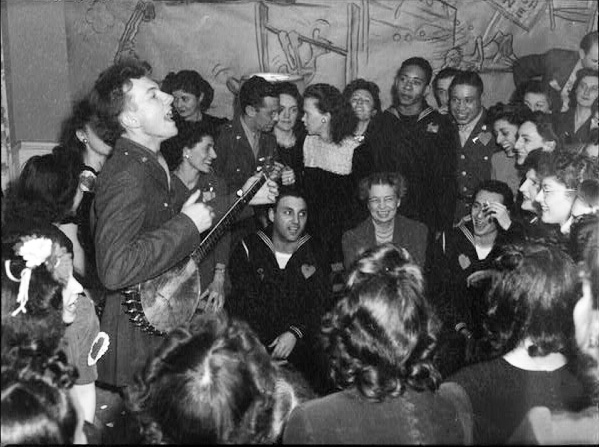
Pete singing with Eleanor Roosevelt listening (and singing along?) Photo: Photograph by Joseph A. Horne. Via Library of Congress site
Mandela and Kennedy
Posted in International, Personal memory on December 28, 2013
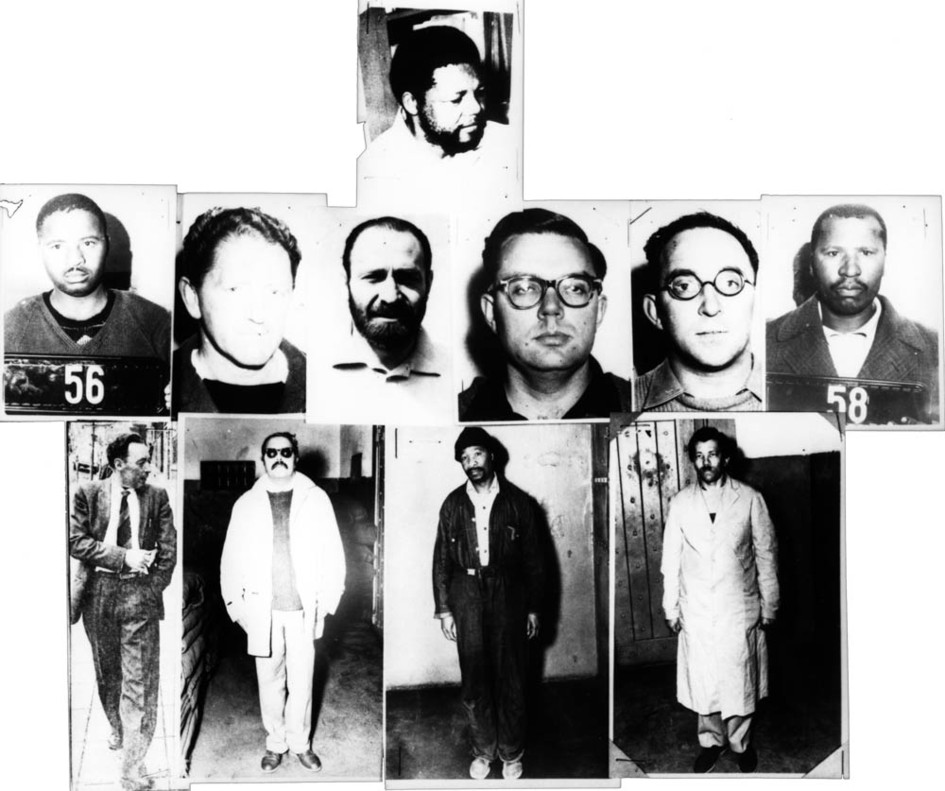
Mandela and fellow accused in 1962 at Rivonia trials. Photo, Wikimedia Commons
For several weeks, I have read and watched as much as I could on Nelson Mandela, his life and his legacy. This followed on the heels of several weeks of reading and watching as much as I could about the 50th anniversary of John F. Kennedy’s death. I surprised myself, since spending that much time on any one subject is increasingly hard, given the competing distractions for my own short attention span. With all the ink and celluloid given over to both men, it seems there is little else to add, except I did not see any commentary which connected the two men, and our fascination with both.
On almost all levels, it’s easy to understand the lack of side-by-side comparison of these two men. Mandela was an exceptional and exceptionally unique leader in this day and age. His own words of avoiding the mantel of prophet in lieu of being a servant, a humble servant, belied the global agreement that he stood above every other leader in our lifetimes. (The few detractors found themselves deservedly isolated and unworthy of any serious discussion, here or anywhere.) Mandela’s ability to find common ground, in a society deeply divided by class, race and culture and steer it towards a peaceful and democratic outcome was a legacy which nearly all praised.
Kennedy, on the other hand, never was able to match such an accomplishment. He never won the Nobel Peace Prize. Few would say that had he lived, he would have achieved the kind of legacy that Mandela built.
Still, I see three ways to connect the two men. First, both touched a global audience, in different ways. Kennedy stood less for accomplishment than for promise, albeit unfulfilled, and probably unlikely to be fulfilled. Mandela emerged from a personal sacrifice of 27 years in prison, full of promise, and was able to realize it, through the strength of his character, his integrity and his vision. Their funerals brought together more global leaders perhaps than any other in the intervening years.
The two men were born a year apart, and they departed the political scene a year apart, Mandela to prison in 1964, a year after Kennedy’s death. The absence of both men from the following decades of active political life left a void in each country. Yet, Mandela was able to emerge to steer his country away from the injustices of institutionalized racism. What has been missing in all of the commentary on Mandela is how his own survival was never guaranteed, especially in a society where so many anti-apartheid activists had been assassinated, exiled or marginalized. We will never know how Steve Biko or Chris Hani may have contributed to the transition from apartheid. Similarly, Kennedy’s absence has been the root of much speculation and debate over the course of U.S. behavior at home and abroad.
I am convinced that the course of both countries’ histories would have been starkly different if Kennedy had lived and Mandela had not survived. South Africa’s ability to steer a course different from Yugoslavia or Zimbabwe lay in the deep pool of human talent of the nation, which Mandela as its leader was uniquely able to tap into and inspire. Kennedy, based on his decisions during the Cuban missile crisis which were so different than the recommendations from his Vice-President and successor, Lyndon Johnson, most assuredly would have steered differently in Vietnam. Ironically, Kennedy’s death, much like Mandela’s survival in advancing the cause of civil and human rights in an unjust society.
Finally, the third area of comparison is personal, and I suspect is shared by more people than imagined. The recent coverage brought back intense personal memories. Like many, I remember the school ground I was standing on when I first heard of Kennedy’s death that Friday afternoon in 1963. The television in our household which we could watch only under the strictest of conditions, was kept on for hours through the funeral and the assassination of Jack Ruby, after church on Sunday.
Likewise, many around the world have memories of the anti-apartheid movement, either as protesters in their own countries or as observers of the visits by the recently released Mandela. I happened to be living in South Africa, working at the U.S. Consulate in Durban, with a front-row seat on the crumbling of apartheid. Like millions across the globe, I remember watching Mandela’s release that warm, sunny February Sunday. Memories of the thrill and the hope of his release were replaced by others of four years of effort, tragedy and turmoil to turn that hope into reality. Through all that was Mandela, his perseverance, his righteousness and his generosity.
The intensity of these memories of Mandela and Kennedy reached similar heights, keeping me in front of the television, tuned to the same radio station and reading to the end of articles and commentary. Both men triggered the memories of my youth, of my adulthood, of hope and inspiration, of a cause larger than oneself.
The Power of Film
Posted in Civil War, History in our surroundings, Public History on December 10, 2013
No matter how many times I have read about slavery and all its accompanying violence, I was still unprepared for the impact of visualizing the beatings, the rapes, the breaking apart of families, the hangings and other assorted fears and horrors portrayed in 12 Years a Slave. This new film by British director Steve McQueen tells the story of Solomon Northrup, a free Black man from Saratoga New York, who was kidnapped and sold into slavery, and then wrote a book about his ordeal upon his release after 12 years working on a string of southern plantations in the mid-18th century.
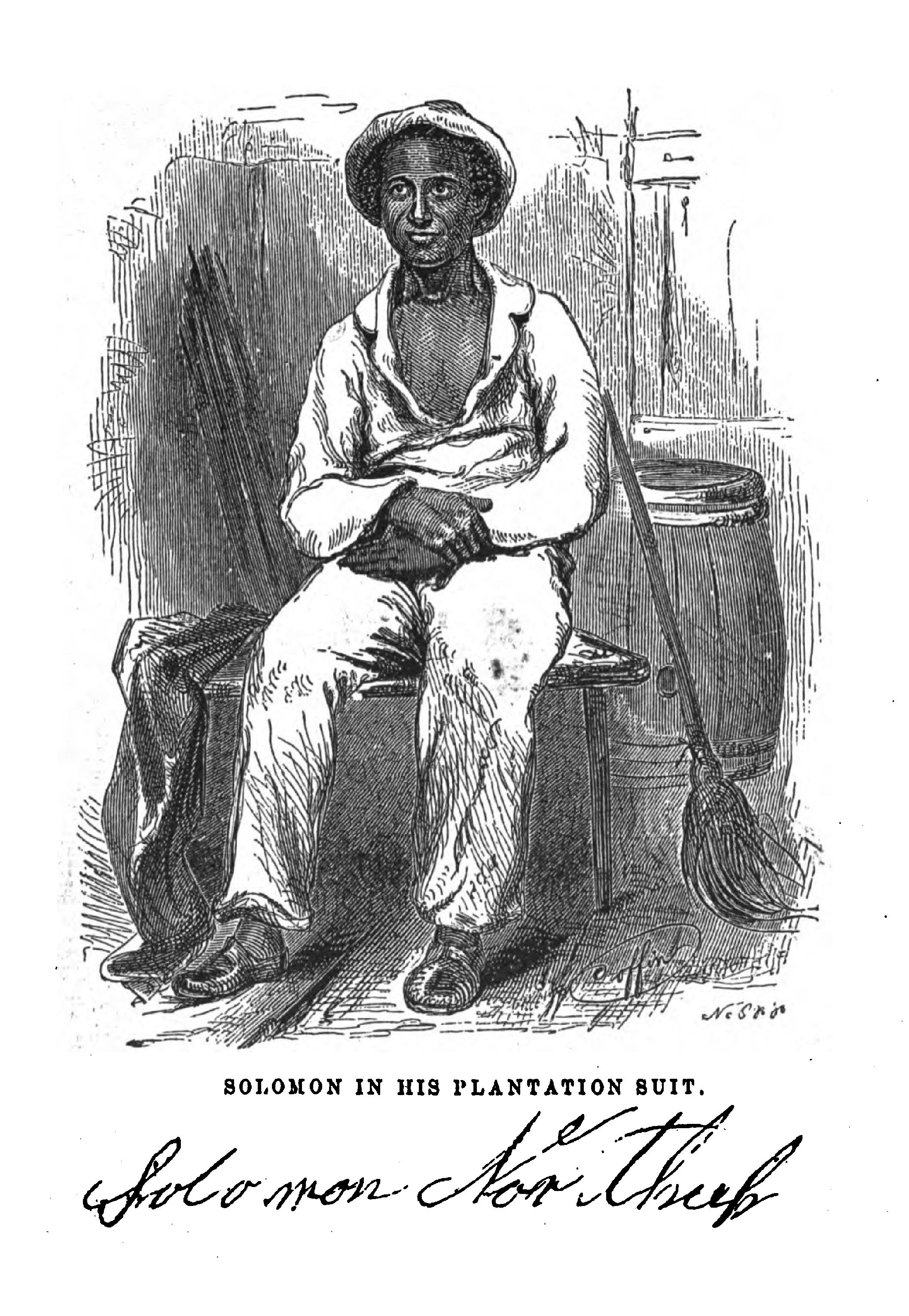
Solomon, from his autobiography published in 1855
I had to cover my eyes on several occasions; my wife walked out during one scene, so disturbed. Yet, while she said at the end of the film that she “hated the movie,” I walked away thinking this was a movie every American should see. Both sentiments came from the same effect of the realities of the institution of slavery. She hated to see the suffering so vividly captured. She
was right in that it was certainly something to hate. The film though succeeded in evincing her reaction, and therefore was effective in forcing people to see exactly what it means to read about a slave getting a whipping, the oozing welts crisscrossing the back, the keloid scars, and the immediate return to the fields to work. It would be hard to walk out of that movie and think that those scars on individuals long since dead do not still, or should not still, weigh on the national consciousness.
It wasn’t just the graphic violence which was so horrifying. The film was also able to show the endemic fear and indifference on the plantation. “I survive,” said Solomon at one point to a mother whose grief over her lost children was inconsolable, leading ultimately to her own death at the hands of her owner. Living in fear of the whims and temperament of the person who controlled your existence was the norm. So was the indifference, as McQueen showed owners’ wives watching casually from the balconies of their houses as punishments were meted out. Even other slaves went about their daily chores as Solomon struggled to stand on his tiptoes to avoid choking to death from the noose around his neck.
This film reminded me of 42 or Brokeback Mountain, Schindler’s List, or even The Passion in their ability to evince a transformational reaction, through the visual portrayal of suffering, despite the abundance of the printed word on
topics portrayed in those movies. People have heard of the abuse Jackie Robinson, the first African-American baseball player in the major leagues, received when he joined the Brooklyn Dodgers, but seeing an opposing manager yell out the n-word repeatedly has the ability to shock that words on a page simply cannot convey.
I am unsure of the appropriate reaction, from a national, collective perspective. It has to lie somewhere between the c
asual “national conversation” and the probably unrealistic reparations claims. Steve McQueen, said in a New York Tim
es interview that he wanted people to see the connections of this historic past to the present, in Trayvon Martin, in our prisons crowded with African-American offenders, in still segregated neighborhoods. Ridley Scott, the script writer, said on the PBS News Hour that he wanted Americans to confront this past.
Two final points. Going back to Roots or even further To Kill a Mockingbird, film has helped place race and slavery in the forefront of our national consciousness. The frequency of films exploring these themes has increased in recent years, from 42 to The Help and even Django Unchained. These films have achieved both commercial success and critical acclaim. Do their frequency
and success have more to do with an increased public acceptance to confront this uncomfortable past, or more of a need for the country to face its legacies?
Finally, it is unfortunate that 12 Years a Slave is not in theaters in my hometown. Movies like Ender’s Game and Thor, the Dark World dominate the local complexes, so we had to travel to an adjoining town to an arts theater to see the movie. So much for my hope that every American view this film about the real dark world, that of slavery in our past, and its vestiges in our present.

A memoir in letters. Excerpts from letters that a father wrote his children each week for almost 30 years, full of the mundane and poignant, the witty and wise. Stories from a different time, from a small town in Connecticut.
History Shock
 Pleased to announce the publication of my book in May 2021 by the University Press of Kansas. This collection of “stories with a history” narrates incidents over the course of my career in the Foreign Service when historical understanding – or lack of it – got in the way in the conduct of day-to-day diplomacy.
Berkshire County’s Industrial Heritage

Check out this book on the nineteenth century mills and those who owned and worked in them. Available through Arcadia Press or Amazon.
Slide Show – Getting to Yes, Woman Suffrage in the Berkshires and Beyond
-
Slide Show – Intersections, Pittsfield’s Neighborhoods
-
Slide Show – Turning Points


Slide Show – Preserving the old Berkshire Athenaeum
 Thomas Allen donated $50,000 to build the Athenaeum in 1876.
 A yong architect from New York, William Appleton Potter, had his design selected for the new Athenaeum.
 The original architectural drawing of the front elevation of the Athenaeum
 An early photo of the High Victorian Gothic building, pointed arches, twin gables, multi-color stone patterns,skylight, stained glass windows
 Majestic, quartered oak tresses in the addition built in 1896
 Proposed new library design, in 1944
 Bulging of stonework on from of building required drastic measures to shore up front, in 1979
 A restored skylight is returned to the roof in repairs undertaken in 2001
 Stained glass window on west gable, showing steel tie placed in 1979 stabilization repairs
 Masonry work begins on the Athenaeum in the deep of winter
 Removing the stained glass panels for repair
 Cracks in the masonry
 More cracks in the masonry
 Lifting the capstone off the east gable, the first stone removedd








 History All Around